

Castle Clash: World Ruler
IGG.COM
I approached Castle Clash: World Ruler as a long-term strategy game rather than a quick castle-building distraction. That distinction matters. Its battles are only one part of the experience; the more interesting question is how I spend limited time and resources between improving my base, developing heroes, preparing an army, and choosing when to commit to a fight. After playing it, I found a game with a surprisingly broad decision space, but also one that asks for patience and can become demanding if I try to keep up with every system at once.
Developed by IGG.COM, this free strategy game has been available since July 25, 2013, and its longevity is easy to understand. It has accumulated an average rating of 4.4 from around 5.1 million ratings, with more than 100 million installs. Those figures do not automatically make it right for everyone, but they do reflect how well the core idea has traveled across different kinds of mobile players. The age rating is Everyone 10+, and the current version is 4.3.8 for devices running Android 6.0 or later.
Where the real decisions begin
The first thing I noticed is that progress is not simply a matter of tapping the most expensive upgrade available. Every improvement competes for attention with another useful improvement. A stronger base can make future development easier, but investing in heroes may produce a more immediate difference in battles. Training an army can help me push forward now, while saving resources can prevent a frustrating pause when an important upgrade becomes available.
That creates a useful planning horizon. For a short session, I can collect resources, start an upgrade, adjust a lineup, and leave. For a longer session, I can study what is blocking progress and decide whether the problem is damage, survival, timing, or inefficient resource use. The game rewards players who think beyond the next button, especially when several improvements appear attractive at the same time.
I recommend choosing one practical goal before opening the game. I might decide to strengthen a particular hero, prepare for a difficult campaign stage, or improve the economy of my base. Without that focus, it is easy to spend materials in several directions and feel busy without becoming meaningfully stronger. This is one of the first non-obvious lessons: progress feels faster when I choose a priority instead of upgrading everything evenly.
Related News

Why WhatsApp Messenger Still Makes Everyday Communication Feel Easy

Jurassic World: The Game Is the Better Dino Tycoon for Strategic Players

Threads in Real Life: Who Should Join, Lurk, or Leave

How SHEIN Turned Shopping Into an Endless Content Feed

How to Make Fortnite Feel Smarter on Mobile

Should You Switch to Microsoft Outlook on Mobile?
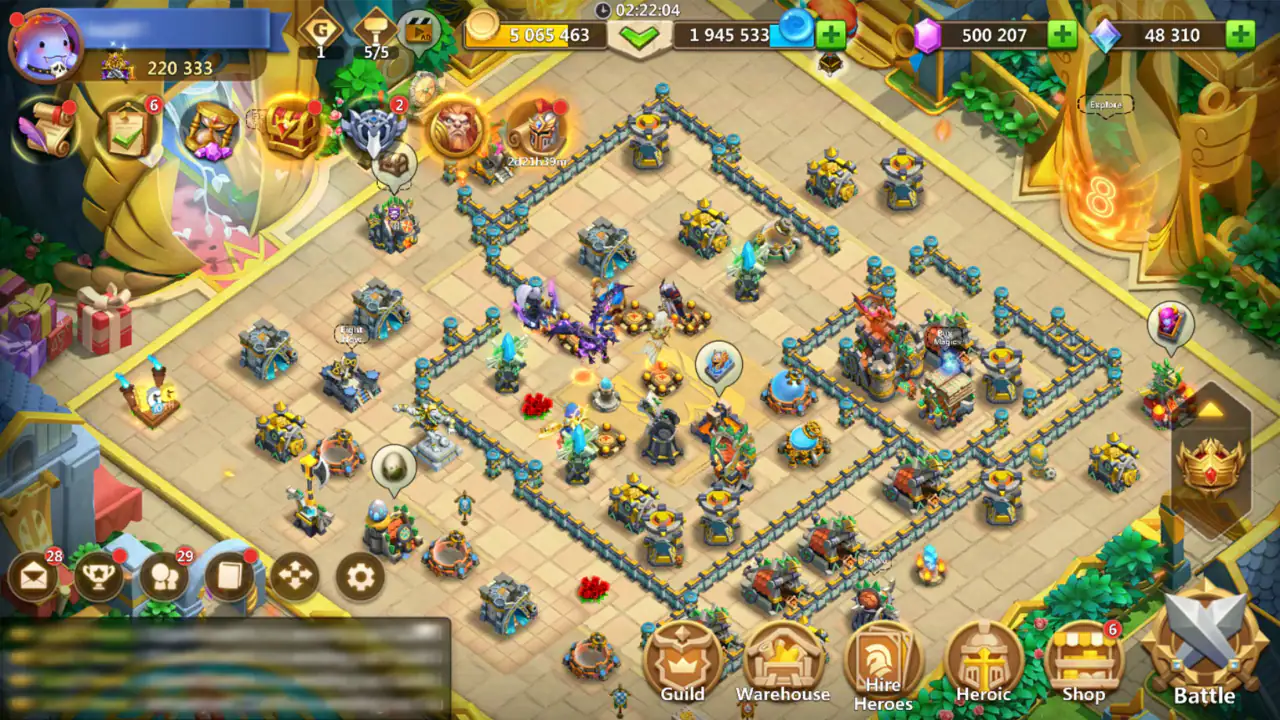
The base also works as a planning board rather than just a decorative home. Its buildings represent future options, and the order in which I develop them changes how quickly I can access those options. I do not need to understand every system immediately. In fact, trying to master everything at the beginning made the experience more confusing. I found it better to learn what directly supports my current objective and return to the wider menu later.
Building a roster instead of chasing one favorite
Heroes are central to the way I approach encounters. It is tempting to invest almost everything in the character that performs best during the opening stages, but that can leave the rest of the roster underdeveloped. A single powerful unit may solve familiar fights while failing when an opponent uses a different pattern or when the stage punishes a narrow approach.
I had better results when I treated my roster as a set of answers. One arrangement might be suitable for surviving pressure, another for dealing damage quickly, and another for handling a stage where positioning or timing matters more than raw strength. This does not mean I need to upgrade every available hero equally. It means I should avoid making my entire plan depend on one option.
Gallery
A practical workflow is to keep a small group of reliable heroes ready while testing new combinations in less costly situations. That lets me experiment without sacrificing all forward momentum. I also learned to judge a hero by the job it performs in a lineup, not only by the largest number shown on its profile. A character that protects a fragile damage dealer can be more valuable than another attacker who looks stronger in isolation.
Why the battle is only half the strategy
Combat is more satisfying when I make a decision before deploying rather than treating the encounter as a reflex test. I look at the opposing setup, consider which part of my team is most vulnerable, and decide whether I want a safe clear or a faster but riskier attempt. When a battle goes badly, simply repeating it with the same lineup is rarely the best response.
The useful question is not always “How do I add more power?” Sometimes I need a different arrangement, a better sequence, or a more suitable hero. Other times the honest answer is that I am attempting content before my account is ready. Recognizing that early saves resources and prevents me from turning a strategic problem into an expensive upgrade race.
For everyday play, this makes the game fit short visits surprisingly well. If I have a few minutes during a commute or while waiting for an appointment, I can handle routine tasks and begin a longer improvement. When I have more time, I can compare lineups and attempt harder content. The drawback is that the game can also encourage me to check repeatedly, particularly when several timers or rewards are competing for attention.
Risk, reward, and the cost of impatience
The most important trade-off is between immediate power and durable progress. Spending resources to win a battle now can be worthwhile if that victory unlocks something useful. It can be wasteful if the same resources would have completed a major upgrade that improves many future activities. I found myself making better choices once I stopped asking whether I could win and started asking whether winning now was worth delaying something else.
This is where the free-to-play structure becomes relevant. The game costs nothing to download, but in-app purchases range from $0.99 to $99.99 per item. I could play without paying, yet the presence of purchases changes the feeling of time. Waiting is part of the design, and impatience can make acceleration look more attractive than it really is.
My advice is to treat purchases as a boundary decision, not as a solution to every difficult stage. If I am stuck because my formation is poor, paying to increase power may hide the real issue without teaching me how to play better. If I already understand the system and simply want to reduce waiting, that is a different choice. Either way, setting a personal spending limit before progress slows down is much safer than deciding in the middle of frustration.
The reward side is more than a larger number. A well-planned upgrade can change which battles are practical, which heroes can work together, and how confidently I can approach new content. That creates a satisfying sense of compounding progress. The risk is that the same system can make small inefficiencies feel expensive. A poorly timed investment may not ruin an account, but it can make the next stretch feel unnecessarily slow.
I also noticed that risk management applies to attention. The game offers enough activities to make a player feel that something is always waiting. That can be motivating for someone who enjoys a persistent project, but tiring for anyone who wants a clean start-and-stop experience. If I want a calm session, I choose one objective and leave after completing it instead of trying to clear every available task.
A realistic daily routine
Imagine that I have ten minutes in the evening. I collect what has finished, check whether a building or hero improvement can begin, and review the next obstacle in my current campaign. If I have enough resources, I start the upgrade that supports my chosen goal. I then use a dependable team for routine battles rather than testing an unproven lineup when my time is limited.
On a quieter weekend, I can revisit that same plan. I compare a defensive arrangement with a damage-focused one, attempt a stage that previously defeated me, and note whether the failure came from weak units or poor choices. This two-speed routine is one of the game’s strengths. It respects short sessions while still offering room for deeper planning when I want it.
The routine becomes less comfortable if I feel pressured to optimize every reward. In that case, the game stops being a flexible strategy hobby and starts becoming another obligation. I would skip it if I dislike timers, repeated resource collection, or the temptation to pay when progress slows. A premium strategy game with a fixed purchase may be a better fit for that preference.
Adapting when the first plan stops working
Adaptation is where the game separates thoughtful play from simple accumulation. Early success can encourage a fixed formula: use the same heroes, repeat the same approach, and assume that a higher power level will solve everything. That worked only until the game presented situations where the weaknesses of my preferred lineup became obvious.
I began changing one variable at a time. First I adjusted the team, then the order of deployment or the way I approached the encounter, and only afterward did I consider a major investment. Changing everything simultaneously made it impossible to learn from the result. Changing one element gave me a clearer idea of what actually helped.
This method is especially useful for players who do not want to memorize every system. I can keep a simple record in my head: which unit survived, which one disappeared too early, whether damage was sufficient, and whether the fight was lost immediately or near the end. Those observations are often more valuable than blindly following a recommended setup.
Another useful trade-off involves specialization. A focused roster can become powerful more quickly because resources are not spread thinly. A broader roster gives me more ways to respond when the game changes the problem. I prefer a middle ground: a dependable core for regular play, plus a few alternatives developed enough to perform a different role. That approach avoids both extremes of over-specialization and wasteful equality.
When stronger is not the same as better
One of my clearest lessons was that raw strength does not always translate into a smoother battle. A team can have impressive individual units and still fail because its roles overlap or because its vulnerable members are exposed. Conversely, a less glamorous combination can perform better when each hero contributes something the others lack.
This is why I would not judge the game solely by how quickly it gives me larger numbers. The interesting decisions appear when I have to choose between a familiar powerful option and a less developed option that better fits the problem. The game is at its best when I have enough freedom to make that choice and enough feedback to understand the result.
It is also worth adapting expectations. This is not a strategy title that I can fully finish in a few evenings and put aside. Its appeal comes from gradual account development, repeated refinement, and the satisfaction of solving a problem that previously felt out of reach. Players seeking a compact campaign with a clear ending may find the ongoing structure less rewarding.
How the depth holds up over time
After the novelty of the opening phase fades, the question becomes whether the routine still has meaning. For me, it does when I set personal milestones. Improving a hero because it supports a specific plan feels more satisfying than upgrading simply because the button is available. Preparing for a difficult encounter also gives ordinary resource collection a purpose.
The long-term strength is the relationship between small choices. A building improvement affects future development, a better hero changes battle options, and a successful stage can open a new direction. None of these decisions is dramatic by itself, but together they create a persistent strategy project. That is why the game can remain engaging for players who enjoy gradual optimization.
The long-term weakness is equally clear: repetition can become visible. Once I find a reliable routine, some activities feel like maintenance rather than discovery. The game asks me to decide how much of that maintenance I am willing to accept in exchange for the larger moments of experimentation. I recommend it more strongly to players who enjoy that rhythm than to people who want constant novelty.
The large community implied by its install history can make the game feel like part of an established ecosystem rather than an obscure experiment. Still, popularity should not be confused with simplicity. New players may encounter many menus, currencies, upgrade paths, and choices before they understand what deserves attention. I would give myself time to learn instead of trying to optimize from the first session.
Version 4.3.8 gives current players a concrete point of reference, but the more important consideration for me is whether the underlying loop matches my habits. The game works well when I enjoy checking progress, making medium-term plans, and returning to a developing roster. It works less well when I want every session to deliver a self-contained victory.
Who should play and who should pass
I would recommend it to someone who likes mobile strategy with a persistent base, hero development, and battles that reward preparation. It is particularly suitable for players who enjoy comparing alternatives and watching a plan improve over several sessions. The free entry point also makes it easy to test that loop before deciding whether it deserves regular attention.
I would be more cautious with someone who dislikes waiting, recurring resource management, or in-app purchase pressure. The age rating of Everyone 10+ makes it broadly accessible, but accessibility does not remove the need for patience. A younger or more casual player may enjoy the battles while finding the wider progression layer difficult to organize.
I would also steer competitive perfectionists toward a clear personal rule: do not spend simply because a loss feels embarrassing. Use failures as information first. If the game remains enjoyable after that approach, it is probably a good match. If every delay feels unacceptable, another strategy game with a shorter and more predictable structure may be better.
My strategy verdict
Castle Clash: World Ruler succeeds because it turns mobile play into a series of connected decisions. I am not only choosing what to fight; I am choosing what kind of account I want to build, which weaknesses I can tolerate, and how far ahead I need to plan. The best moments come when a carefully adjusted lineup succeeds where a stronger but careless one failed.
Its limitations are part of the same design. The persistent progression can feel repetitive, the number of choices can overwhelm newcomers, and purchases may test the patience of players who want immediate progress. I would not recommend it as a completely relaxed game with no obligations. I would recommend it as a long-running strategy hobby for someone willing to set priorities and accept gradual improvement.
My final advice is to begin slowly, develop a reliable core, and keep enough flexibility to change direction. Do not measure every session by how much power you gained. Measure it by whether you made a useful decision: an upgrade that supports your plan, a lineup that answers a weakness, or a failed attempt that taught you what to change. If you enjoy planning several moves ahead, the game has enough depth to earn a regular place on your phone; if you want instant results and minimal management, it is better to look elsewhere.
FAQs for Castle Clash: World Ruler
What is Castle Clash: World Ruler about?
Castle Clash: World Ruler is a strategy-based mobile game where players build and manage their own kingdoms. The core gameplay involves constructing buildings, training armies, and engaging in battles against AI opponents or other players. The game combines elements of resource management, strategic planning, and combat, providing an immersive experience for strategy enthusiasts.
Is Castle Clash: World Ruler free to play?
Yes, Castle Clash: World Ruler is free to download and play on both Android and iOS platforms. However, it does offer in-app purchases that can enhance the gaming experience by providing resources, heroes, and other premium features. While purchases can accelerate progress, they are not necessary to enjoy the game fully.
What are the system requirements for Castle Clash: World Ruler?
For Android users, Castle Clash: World Ruler requires Android 4.1 or higher, while iOS users need iOS 9.0 or later. The game is compatible with most smartphones and tablets, although it's recommended to have a stable internet connection to enjoy all the online features, including multiplayer battles and real-time events.
How does multiplayer work in Castle Clash: World Ruler?
In Castle Clash: World Ruler, multiplayer gameplay allows users to join guilds, compete in team battles, and participate in various multiplayer events. Players can engage in PvP (Player vs. Player) battles, where strategic planning and coordination with guild members are crucial for victory. This feature adds a social element, enhancing the overall gaming experience.
What kind of updates and support does the game receive?
Castle Clash: World Ruler receives regular updates that introduce new content, events, and features to keep the gameplay fresh and engaging. The developers are active in addressing bugs and implementing player feedback. Support is available through the game's official website and community forums, where players can find assistance and interact with other fans.
Pros
- Engaging real-time strategy gameplay.
- Diverse hero selection and customization.
- Frequent updates with new content.
- Strong multiplayer and guild features.
- User-friendly interface and controls.
Cons
- In-app purchases can be costly.
- Requires stable internet connection.
- Some features are pay-to-win.
- Can be time-consuming to progress.
- Occasional server connectivity issues.


